
Quick commerce promises delivery in minutes, not days. That promise starts on the screen: if finding and paying takes longer than the delivery, the customer goes elsewhere.
1. Pages that load instantly
Most quick-commerce orders happen on phones, often on mobile data. Lightweight pages, compressed images and minimal scripts matter more here than anywhere else.
2. Search that understands intent
Customers type needs, not product names: dinner for four, something for a headache, party snacks. Search that understands intent — with synonyms, typo tolerance and semantic matching — turns those into a basket.
3. One-tap reordering
A large share of quick-commerce orders repeat. Show previous orders and favourites first, and let customers reorder in one tap.
4. Honest delivery promises
Show the real delivery window for the customer’s location before checkout, not after. A missed promise costs more trust than a slower, accurate one.
5. Stock that is actually in stock
Nothing ends a fast order like a substitution call. Keep inventory in sync and hide items that cannot be delivered in the promised window.
Where AI helps
- Semantic search that matches needs to products.
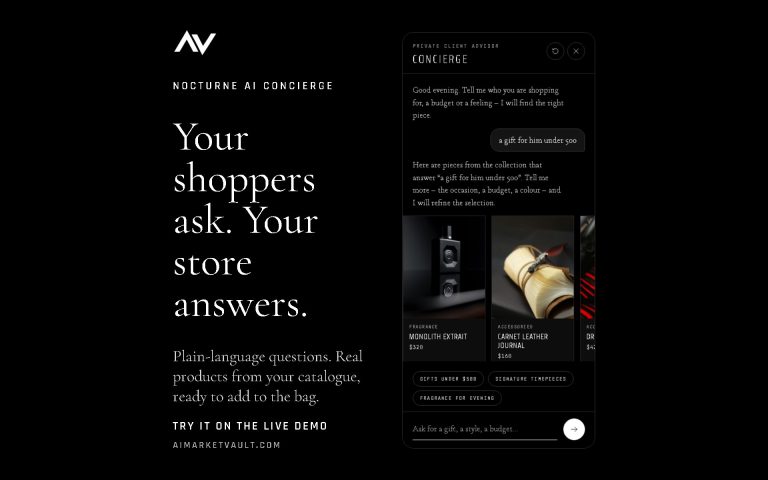
- A shopping concierge that builds a basket from one sentence.
- Automations that flag low stock and late deliveries before customers notice.
Key takeaways
- In quick commerce, the storefront is part of the delivery time.
- Intent-aware search and one-tap reordering drive repeat orders.
- Accurate stock and delivery windows protect trust.
Building intent-aware search? Our managed vector search & RAG plan indexes your catalogue for semantic search, and the AI website concierge turns a sentence into a basket.
Frequently asked questions
Does quick commerce need a native app?
Not necessarily. A fast, well-designed mobile website can serve most customers, especially for first orders.
What is semantic search?
Search that matches meaning rather than exact words, so “something for a cold” can find the right products.
How do I keep delivery promises honest?
Calculate the window from the customer’s location and current capacity, and show it before checkout.
Related: how an AI shopping concierge works · Nocturne luxury WooCommerce theme