
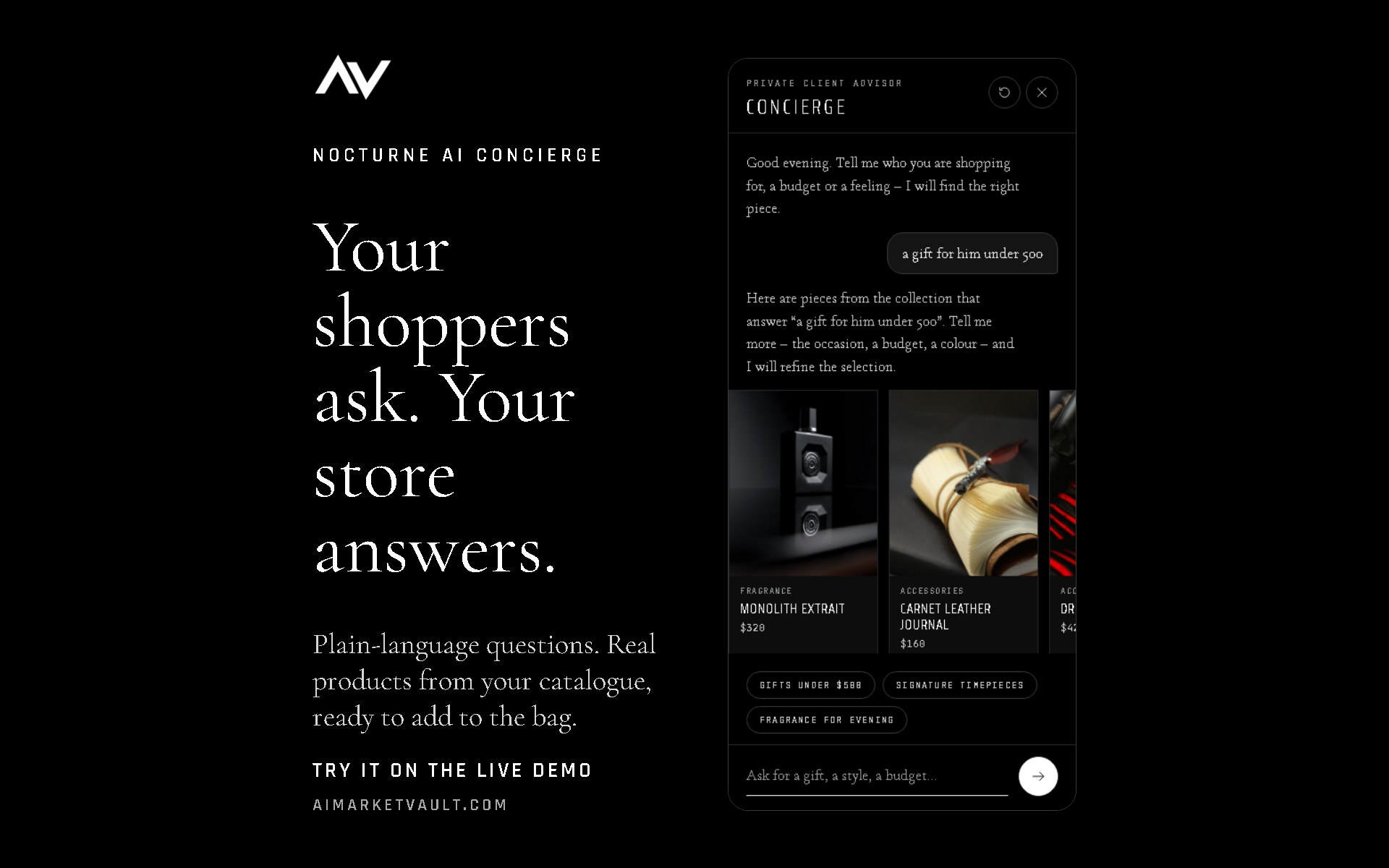
Most store search boxes expect product names. Customers rarely think in product names. They think in occasions, budgets and feelings: a gift for him under 500, something for a black-tie dinner, a watch that will still look right in ten years. An AI shopping concierge closes that gap.
What is an AI shopping concierge?
An AI shopping concierge is a conversational assistant inside your store. The shopper describes what they want; the concierge asks a short follow-up when it helps, and answers with products from your catalogue — each with its real name, price and a button to view it or add it to the bag.
Why the answers must come from your catalogue
A general chatbot will happily invent a product, a discount or a delivery promise. In commerce that is worse than no answer. A concierge built for a store is grounded: it can only recommend items that exist, at the prices your store shows, with stock and links taken from WooCommerce.
- Real products only — every suggestion links to a live product page.
- Real prices — read from the catalogue, never typed by the model.
- Honest gaps — when nothing fits, it says so and offers the closest options.
How the Nocturne concierge works
- The shopper opens the concierge and types a need, a budget or an occasion.
- The concierge searches your catalogue and, when a language model is connected, interprets intent such as “for him”, “under 500” or “minimal”.
- It replies with a short note and product cards the shopper can open or add to the bag.
- The shopper can refine — “something smaller”, “in black” — and the selection updates.
The concierge works with your own Anthropic Claude or OpenAI-compatible key. Without a key it still works in catalogue-search mode, so the feature never breaks your store. Provider usage is billed by the provider.
Where a concierge makes the biggest difference
- Gifting — shoppers know the person and the budget, not the product.
- Considered purchases — watches, jewellery, fragrance and design objects where advice matters.
- Mobile — typing one sentence is easier than filtering five facets on a phone.
How to measure it
Track how many sessions open the concierge, how many of those view a suggested product, and how many add one to the bag. Read the questions shoppers ask: they are a free, constant source of copy ideas and missing products.
Key takeaways
- Shoppers search by need, not by product name.
- A store concierge must be grounded in the catalogue — real products and prices only.
- Nocturne’s concierge uses your own AI key, and falls back to catalogue search without one.
See it in action on the Nocturne live demo, or read about Nocturne and its plans.
Frequently asked questions
Does the concierge need an AI subscription?
It uses your own Claude or OpenAI-compatible API key, billed by that provider. Without a key it still works in catalogue-search mode.
Can it invent products or prices?
No. Suggestions come from your WooCommerce catalogue, and prices are read from the store rather than written by the model.
Does it work on phones?
Yes. The concierge is designed for mobile first, where one typed sentence is faster than filtering.
Related: managed AI website concierge · managed vector search & RAG


2 responses
Comments are closed.